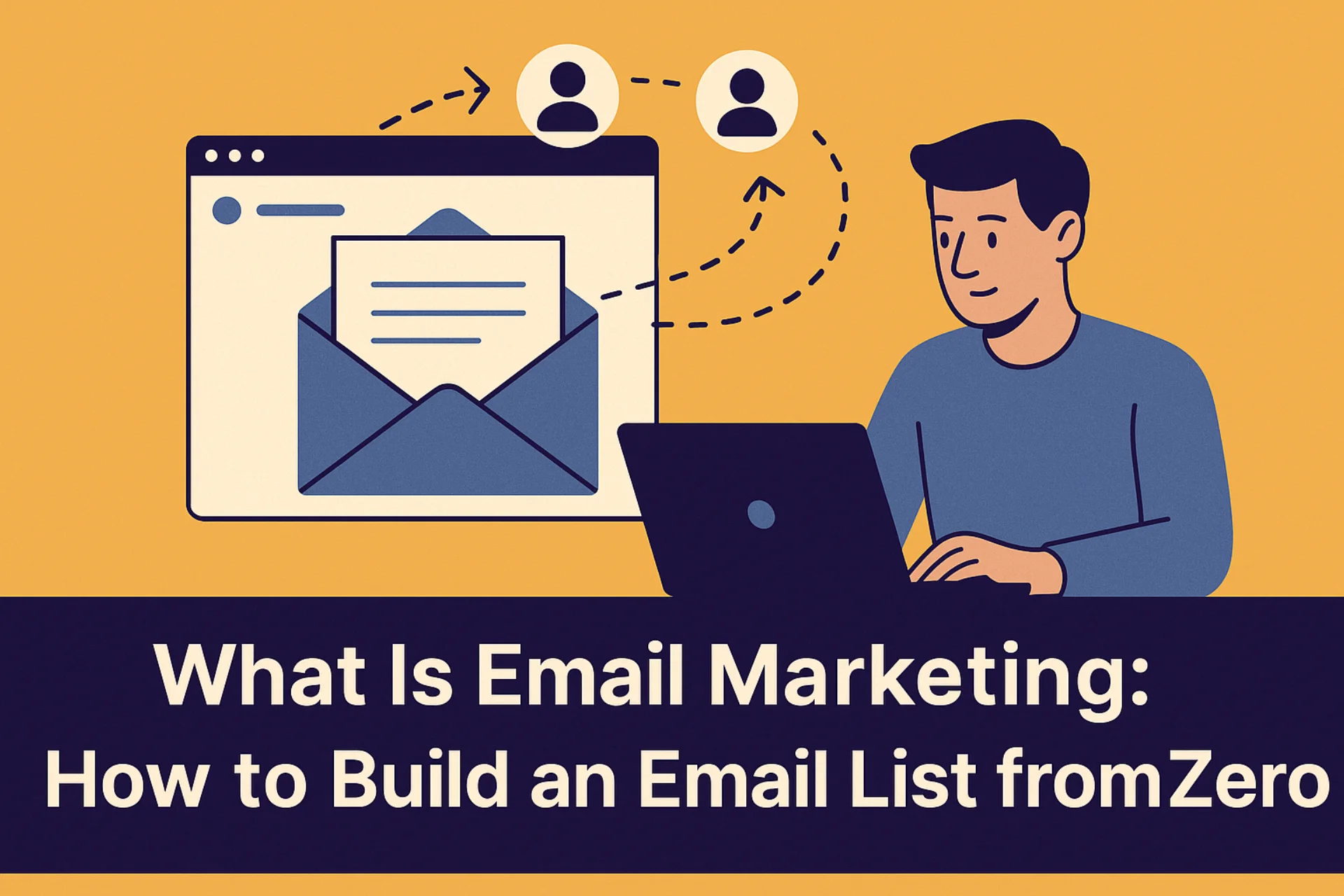
What is Email Marketing: How to Build an Email List from Zero (for Beginners)
If every social media platform disappeared overnight, how would you communicate with your audience?
For many businesses, the honest answer is: they couldn’t.
That’s why email marketing remains one of the most powerful and reliable digital channels available today. It gives you a direct line to your audience—without algorithms, paid reach, or platform dependency.
In this beginner-friendly guide, you’ll learn:
- What email marketing really is
- Why it continues to outperform other channels
- How to build your first email list from zero
- Practical strategies to turn subscribers into loyal customers
By the end, you’ll understand not only how email marketing works—but why it consistently drives long-term growth for businesses of all sizes.
What Is Email Marketing (And Why It Still Matters)
Email marketing is the practice of building relationships with your audience through targeted, permission-based email communication. It goes far beyond newsletters—modern email marketing focuses on education, personalization, and automation.
Unlike social media followers, your email list is an asset you fully own. No platform can take it away, throttle your reach, or change the rules overnight.
Why Email Marketing Dominates in 2025
| Metric | Email Marketing | Social Media |
|---|---|---|
| Average ROI | $36 for every $1 spent | $5–$8 per $1 |
| Audience ownership | Fully owned | Platform-controlled |
| Average conversion rate | 4–5% | Under 1% |
| Personalization | Highly customizable | Limited |
| Algorithm dependency | None | High |
This is why SaaS companies, ecommerce brands, and creators continue investing heavily in email automation platforms like Brevo.
How Email Marketing Actually Works
At its core, email marketing follows a simple but powerful lifecycle—often called the Email Value Funnel.
1. Attract Attention
Offer something valuable in exchange for an email address, such as a checklist, guide, or free tool.
2. Deliver Immediate Value
Your welcome email sets the tone. It should deliver what you promised and give subscribers a reason to stay.
3. Nurture the Relationship
Share helpful content, insights, or stories that build familiarity and trust over time.
4. Convert Naturally
When the timing is right, introduce your product, service, or recommendation—without pressure.
This cycle compounds over time, turning casual subscribers into engaged supporters and paying customers.
Step-by-Step: How to Build an Email List from Zero
Let’s move from theory to execution.
Step 1: Define Your Ideal Subscriber
Before building a list, get clear on who you’re building it for.
Ask yourself:
- What problem are they trying to solve?
- What result are they hoping to achieve?
- Where do they already spend time online?
The clearer your audience definition, the easier it becomes to create offers people genuinely want.
Step 2: Create a High-Value Lead Magnet
A lead magnet is the incentive people receive for joining your list. The best ones solve a specific problem quickly.
High-converting lead magnet ideas:
| Type | Example | Why It Works |
|---|---|---|
| Checklist | “10 Quick Email Optimization Fixes” | Fast, actionable |
| Mini guide | “Email Automation for Beginners” | Builds authority |
| Template | “Ready-to-Use Email Campaign Templates” | Saves time |
| Quiz | “What’s Your Email Marketing Style?” | Interactive |
This works because of reciprocity—when people receive value first, trust follows naturally.
Step 3: Optimize Your Signup Forms
Where you place your signup form often matters more than how it looks.
Best-performing locations:
- Homepage (above the fold)
- End of blog posts
- Dedicated landing pages
- Exit-intent popups (used responsibly)
Keep it simple. Ask only for what you need—usually a name and email. Fewer fields = higher conversions.
Step 4: Send a Strong Welcome Email
Your first email is the most important one you’ll ever send.
A great welcome email should:
- Thank the subscriber personally
- Deliver the promised resource immediately
- Explain what kind of emails they’ll receive
- Invite a simple reply or interaction
Pro insight:
Welcome emails often achieve open rates above 80%, making them your highest-engagement opportunity.
Step 5: Stay Consistent with Valuable Content
Most email lists fail due to inconsistency—not poor writing.
You can stay engaged with:
- Weekly newsletters
- Biweekly insights
- Monthly summaries or tips
Predictability builds trust. Subscribers appreciate knowing when to expect your emails.
Real-World Examples That Prove Email Marketing Works
Freelancer Case Study
A freelance copywriter grew a 1,500-person list using a free 5-day email challenge—and now gets most of her clients directly from email.
Local Business Example
A neighborhood bakery sent weekly “Weekend Specials” emails and increased repeat customers by 40% in three months.
Ecommerce Brand Result
By implementing abandoned cart emails, a small online store recovered 18% of otherwise lost sales.
These examples highlight an important truth: a small, engaged list beats a large, inactive one every time.
Advanced Email Marketing Best Practices
Once you’re comfortable, apply these pro-level strategies:
- Follow the 80/20 rule: 80% value, 20% promotion
- Segment subscribers by behavior and interest
- Use storytelling to make emails feel human
- A/B test subject lines and send times
- Remove inactive subscribers regularly
- Stay compliant with GDPR and email regulations
These practices improve deliverability, engagement, and long-term results.
Common Email Marketing Mistakes to Avoid
- Buying email lists (high risk, low reward)
- Sending emails without a clear purpose
- Ignoring mobile optimization
- Never checking analytics
- Failing to include a clear next step
Professional marketers analyze, adapt, and improve continuously.
Final Thoughts: Your Email List Is a Long-Term Asset
Email marketing isn’t about quick wins—it’s about building trust over time.
When you focus on value, consistency, and genuine connection, even a small list can become a powerful growth engine for your business.
Start simple. Write your first email. Improve one step at a time.
Because email marketing rewards those who serve their audience—not those who chase shortcuts.
Frequently Asked Questions
How often should beginners send emails?
Once per week or every two weeks is ideal for most beginners. Consistency matters more than frequency.
Are newsletters and campaigns the same?
No. Newsletters focus on information and updates, while campaigns are designed to drive a specific action.
What’s the fastest way to grow an email list?
Offer valuable lead magnets, promote signup forms strategically, and add opt-ins to high-traffic pages.
Is email marketing still effective in 2025?
Absolutely. It remains one of the highest-ROI digital channels available.
What’s a good open rate for beginners?
Between 20% and 35% is common. Focus on relevance rather than chasing numbers.